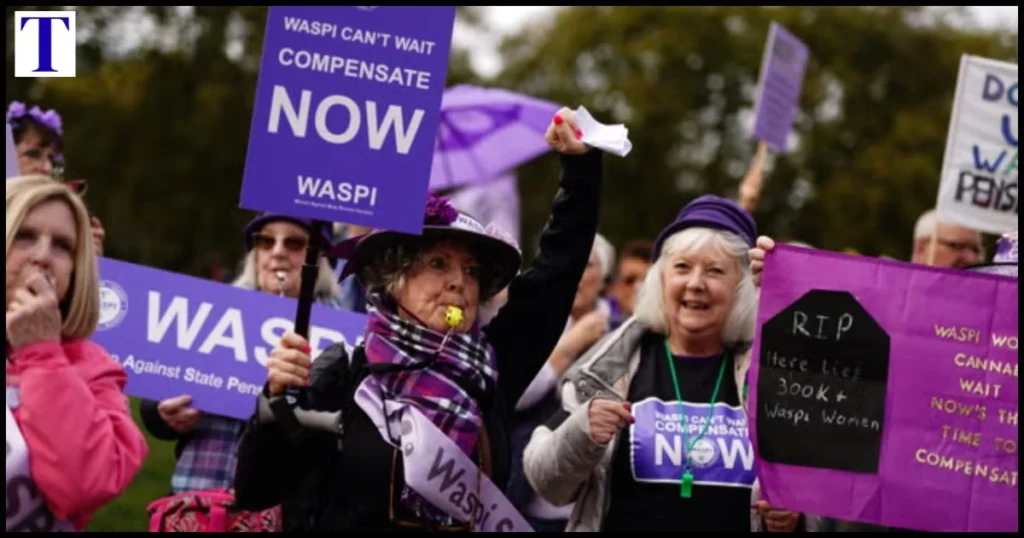

The WASPI latest news today centres on renewed political pressure for compensation, continuing legal action and a possible new attempt to open discussions about redress. WASPI campaigners are currently pushing for talks with Prime Minister Andy Burnham and Chancellor John Healey about options for compensating women affected by failures in communication about State Pension age changes. However, this is not the same as compensation being approved. No general payment scheme or confirmed WASPI payment date has been announced.
The issue concerns women born in the 1950s who say they were not given adequate individual notice of increases to their State Pension age. The Parliamentary and Health Service Ombudsman (PHSO) found maladministration and proposed compensation of between £1,000 and £2,950 in the sample cases it considered. The Government has rejected general financial compensation, while WASPI continues to challenge that decision and campaign for redress.
What Is the Latest WASPI News Today?
The newest political development is a renewed call for direct discussions about compensation. WASPI campaigners have asked Prime Minister Andy Burnham and Chancellor John Healey to engage with them over possible redress for the women affected by State Pension age communication failures. The request is significant because it keeps compensation on the political agenda despite the Government’s previous decision not to introduce a general payment scheme.
At the same time, WASPI’s legal campaign remains active. The campaign continues to challenge the Government’s position through judicial review, meaning the current situation is not a settled compensation case. The important point for readers is simple: there is renewed political pressure and ongoing legal action, but there is still no confirmed nationwide WASPI payout.
Has WASPI Compensation Been Confirmed?
No. WASPI compensation has not been confirmed. The Government’s published decision states that it decided against introducing financial compensation for women affected by delays in sending State Pension age letters. The PHSO’s recommended compensation range therefore has not become an automatic entitlement for millions of women.
This distinction is particularly important because headlines about WASPI can easily be misunderstood. A campaigner calling for compensation, an MP supporting the campaign or a legal challenge continuing does not mean a payment has been approved. Until the Government establishes a formal scheme or a legal outcome changes the position, there is no general application process and no guaranteed payment for every affected woman.
Why Are WASPI Women Asking for Compensation?
The WASPI campaign is focused on the way changes to women’s State Pension age were communicated. Women born in the 1950s were affected by increases to their pension age, and WASPI argues that many were not given enough personalised notice to properly prepare for the financial consequences. The campaign’s argument is therefore about maladministration and inadequate communication, rather than simply opposing every change to State Pension age.
The difference matters because retirement decisions are often made years in advance. Someone expecting to receive their State Pension at a particular age may have planned when to leave work, how long to use savings, whether to reduce working hours or how to manage caring responsibilities. WASPI argues that receiving important information too late reduced the opportunity for some women to make informed alternative plans.
What Did the Ombudsman Decide About WASPI?
The Parliamentary and Health Service Ombudsman investigated the communication of State Pension age changes by the Department for Work and Pensions. Its findings concluded that maladministration had occurred and that the communication failures caused injustice. The findings became a central part of the campaign because the Ombudsman considered that affected women should receive a remedy.
The PHSO said it would have recommended Level 4 compensation of £1,000 to £2,950 for each of its six sample complainants. It also said the DWP should provide a remedy for other 1950s-born women who suffered injustice as a result of the maladministration. The Ombudsman recognised that not every woman would necessarily have suffered the same impact, which is why the method of compensation became an important part of the wider debate.
How Much WASPI Compensation Was Recommended?
The figures most commonly associated with the WASPI campaign are £1,000 to £2,950. These figures come from the PHSO’s Level 4 severity-of-injustice framework and relate to the sample complainants examined by the Ombudsman. They are therefore best described as recommended compensation, not a current payment entitlement.
The Ombudsman also considered the practical difficulty of assessing potentially millions of individual cases. Its published findings discussed both individual assessment and a more standardised approach, noting that a flat-rate system could be easier to administer but could mean some women receiving more or less than they would under an individual assessment. The Government ultimately decided against introducing financial compensation.
What Is the Government’s Latest Decision on WASPI?
The Government’s latest substantive decision is that it will not introduce general financial compensation for women affected by the delayed State Pension age letters. The official Government response, published on 25 June 2026, confirms that ministers considered the PHSO reports, Parliament’s views, fairness and economic factors before reaching that conclusion.
The Government accepted that the DWP should have communicated earlier, but it did not accept that the Ombudsman’s proposed financial remedy should be implemented. This disagreement is at the heart of the continuing campaign. WASPI argues that the Government has not properly recognised the consequences of the communication failure, while ministers have defended their decision not to establish a general compensation scheme.
What Is Happening With the WASPI Legal Challenge?
WASPI is continuing its legal challenge against the Government’s refusal to provide compensation. The campaign says its lawyers are challenging the Government’s decision-making and the reasons used to reject the Ombudsman’s recommended remedy. The judicial review therefore remains an important part of the latest WASPI story.
A judicial review should not be confused with a direct order for compensation. The purpose is to examine whether the Government acted lawfully in reaching its decision. Even if WASPI succeeds, the result could involve the Government reconsidering its approach rather than an immediate automatic payment to every affected woman. This is why legal progress should not be reported as proof that compensation has already been won.
What Is the Latest Political Pressure on WASPI Compensation?
Political pressure has increased again with WASPI’s call for talks about possible redress. Recent reporting says campaigners have urged the Prime Minister and Chancellor to discuss compensation for around 3.5 million women affected by failures in communicating State Pension age changes. WASPI’s own website is also highlighting developments involving Andy Burnham and MP Douglas McAllister.
These developments are important because they create another possible route for the issue to move forward. However, a request for talks is not the same as an agreement to pay compensation. At present, the confirmed position remains that no general compensation scheme has been introduced. Any genuine breakthrough would need to be followed by a formal Government announcement explaining what redress is being offered and who would qualify.
Will WASPI Women Get Compensation?
At present, there is no guarantee that WASPI women will receive compensation. The Government has rejected a general payment scheme, while WASPI is continuing both its legal challenge and political campaign. The latest calls for talks show that campaigners have not accepted the Government’s decision, but they do not establish a legal or financial entitlement.
The situation could change through several routes. A successful judicial review could require the Government to reconsider its decision, while political negotiations could potentially produce a new proposal for redress. Neither outcome is guaranteed. For this reason, affected women should not make financial plans on the assumption that a WASPI payment will definitely arrive.
Is There a WASPI Payment Date?
No official WASPI payment date has been announced. Because the Government has not established a general compensation scheme, there is currently no nationwide timetable for payments. Any website or social media post claiming that a particular date has been confirmed should therefore be treated with caution.
This is one of the most important points for people following the campaign. A payment date would only become meaningful after a compensation scheme had been formally established. That would normally require clear information about eligibility, payment amounts, applications and administration. Until those details are officially announced, there is no confirmed WASPI payout schedule.
Can WASPI Women Apply for Compensation?
There is currently no general Government application process for WASPI compensation. WASPI’s own website prominently warns visitors that no compensation has been agreed and also warns people not to give personal details to scammers.
This means women should be particularly careful with websites, emails or social media messages claiming that they can guarantee a WASPI payment. A legitimate future scheme would need to provide clear instructions about eligibility and how to claim. People should not have to pay an unofficial service simply to access a supposedly guaranteed Government payment.
Who Are the WASPI Women?
WASPI describes the women at the centre of its campaign as those born between 6 April 1950 and 5 April 1960 who were affected by changes to their State Pension age and the way those changes were communicated. The campaign estimates that around 3.6 million women have been particularly affected.
However, being within those birth dates does not currently mean that a woman has an automatic right to compensation. There is no approved nationwide scheme covering everyone in the group. If a future redress scheme is introduced, it would need to establish its own eligibility requirements and explain whether every woman in the affected group qualifies or whether individual circumstances would be assessed.
Why Does the WASPI Pension Issue Matter?
The WASPI dispute matters because State Pension decisions can have a major effect on long-term financial planning. A woman who expected to receive her pension at a particular age could have planned her retirement, employment, savings and household spending around that expectation. If she discovered a significant change later, she might have had less time to adjust those plans.
The issue also raises a wider question about government communication. Major changes to pensions can affect millions of people, so clear and timely information is important. The Ombudsman’s findings have made the WASPI case an important example of the potential consequences when public communication does not reach people as expected. The current debate is therefore about both financial redress and public accountability.
What Could Happen Next for WASPI Women?
The legal challenge is one of the main developments to watch. WASPI continues to pursue its judicial review, while its campaign also seeks political engagement over possible redress. A court outcome could potentially require the Government to reconsider aspects of its decision, depending on the judgment. It would not necessarily mean an immediate payment to every woman.
Political discussions could also become significant if the Government agrees to engage with WASPI campaigners. The current calls for talks are therefore worth watching, but the key difference is between a request for negotiations and an agreed compensation package. For affected women, the strongest evidence of real progress would be a court judgment, a formal Government proposal or an officially announced compensation scheme.
What Should WASPI Women Watch For?
The safest approach is to separate confirmed developments from campaign claims, political statements and online predictions. WASPI announcements explain the campaign’s position, while Government announcements establish official policy and court judgments determine the legal position. These sources can point in different directions, so readers should look carefully at what has actually been decided.
The most important developments to watch are:
- A decision in the ongoing legal challenge.
- Any formal talks between the Government and WASPI campaigners.
- A new Government announcement on redress.
- Parliamentary developments concerning compensation.
- The creation of an official compensation scheme.
- Clear eligibility and payment rules.
- Any confirmed payment date.
Until one of these developments occurs, claims about guaranteed payments should not be treated as fact.
What Is the WASPI Latest News Today in Simple Terms?
In simple terms, WASPI compensation has not been approved, but the campaign is still fighting for it. The latest political development is the renewed push for talks about possible redress, while the legal challenge against the Government’s position continues. WASPI’s own latest updates also highlight political activity involving Andy Burnham and Douglas McAllister.
The Ombudsman previously recommended compensation between £1,000 and £2,950 in the relevant sample cases, but that recommendation is not an automatic payment. There is also no confirmed payment date or general application process. The next major development could therefore come from the courts, political discussions or a new Government decision.
(FAQs)
Has WASPI compensation been confirmed?
No. WASPI compensation has not been confirmed. The Government has not approved a general compensation scheme or announced nationwide payments for affected WASPI women.
How much WASPI compensation did the Ombudsman recommend?
The Parliamentary and Health Service Ombudsman recommended Level 4 compensation of £1,000 to £2,950 for the six sample complainants considered in its investigation. These are recommended figures, not confirmed payments for all WASPI women.
Are WASPI women still taking legal action?
Yes. WASPI continues to challenge the Government’s decision through judicial review. The legal challenge concerns the Government’s handling of the Ombudsman’s findings and its decision not to provide general compensation.
When will WASPI compensation be paid?
There is currently no confirmed WASPI compensation payment date. No general compensation scheme has been established, so claims about a specific payment date should be treated cautiously.
Can I apply for WASPI compensation now?
No. There is currently no general Government application process for WASPI compensation. Be careful with unofficial websites or messages asking for personal or banking details in exchange for a supposed WASPI payment.
Conclusion: What Does the Latest WASPI News Mean?
The latest WASPI news shows that the campaign remains active and that the compensation dispute is far from over. The Government has rejected general financial compensation, while WASPI continues its judicial review and is pressing for political talks about possible redress. The latest calls for discussions involving the Prime Minister and Chancellor are therefore significant, but they should not be mistaken for an announcement that payments have been approved.
For affected women, the most important facts remain clear. The Ombudsman recommended compensation of £1,000 to £2,950 in the relevant sample cases, but there is currently no general payment scheme, no confirmed payment date and no nationwide application process. The next meaningful change could come from the legal challenge, political negotiations or a new Government decision. Until then, WASPI compensation remains an unresolved campaign and legal issue rather than guaranteed money.