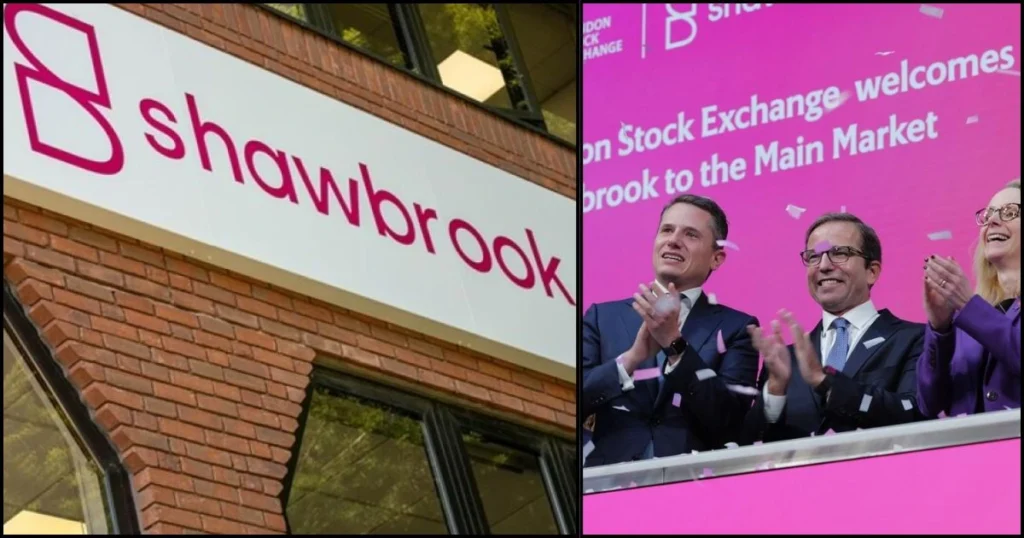

The Shawbrook bank share price is attracting growing interest from investors looking for opportunities in the UK banking sector. Shawbrook Group plc is listed on the London Stock Exchange under the ticker SHAW and operates as a specialist bank rather than a traditional high-street lender. Its business focuses on areas including business finance, property lending, consumer finance and savings, giving it a different profile from larger UK banking groups.
For investors, the share price alone does not tell the whole story. It is important to understand how the stock has performed since its IPO, what analysts expect, how quickly the business is growing and whether its profits and capital position support the current valuation. This guide examines the Shawbrook share price, chart, history, IPO price, price target, forecast, future outlook, market capitalisation and financial performance in simple terms, helping readers understand the key factors that could influence the shares over time.
Shawbrook Bank Share Price Today
Shawbrook Group plc shares trade on the London Stock Exchange under the ticker SHAW. The latest available market data puts the shares at around 320p, although the price can change throughout the trading session. The stock has also experienced a wide trading range, showing that investors have placed significantly different values on the company over relatively short periods.
The current price is more useful when compared with the company’s financial performance and previous valuation. Shawbrook has continued to report strong operating results, including significant growth in underlying profit and a healthy return on tangible equity. Investors should therefore consider earnings, lending growth, capital strength and future guidance alongside the market price. This provides a clearer picture of whether the shares could offer value than simply looking at whether the price has recently risen or fallen.
Shawbrook Bank Share Price Chart
A Shawbrook share price chart gives investors a visual way to understand the stock’s performance over different periods. Looking at one month can reveal short-term volatility, while six-month and one-year views can provide a better understanding of the wider trend. Comparing the chart with the IPO price can also show whether the market currently values the company above or below its original listing valuation.
However, a chart should not be used on its own to decide whether to buy shares. Price movements can be caused by earnings announcements, interest-rate expectations, economic news, analyst upgrades or downgrades and changes in investor sentiment. The most useful approach is to combine the share-price chart with financial results. If the company’s profits, loan book and returns are improving while the valuation remains subdued, investors may see potential value; if financial performance weakens, a falling share price may reflect genuine concerns.
Shawbrook Bank Share Price History
Shawbrook has a relatively short public-market history compared with major UK banks. Shawbrook Group plc returned to the London Stock Exchange in 2025, meaning investors do not yet have decades of listed trading data to examine. This makes the company’s financial development particularly important when assessing its share-price history.
Rather than concentrating only on past price movements, investors should track the progress of the underlying business. Important measures include profit before tax, earnings per share, loan-book growth, customer deposits, return on tangible equity and the CET1 capital ratio. These figures help show whether Shawbrook is becoming more profitable and financially stronger. They can also explain why the share price may move even when there has been no major change in the company’s long-term strategy.
Shawbrook IPO Price
Shawbrook’s IPO price was 370p per share, giving the group an initial valuation of approximately £1.92 billion. The listing was an important milestone because it brought Shawbrook Group plc back to the public markets and gave individual and institutional investors the opportunity to own shares in the company.
The IPO price is an important reference point, but it should not be treated as a guaranteed measure of fair value. A share trading below its IPO price is not automatically cheap, just as a stock trading above its IPO price is not necessarily expensive. The market constantly reassesses a company’s future earnings and risks. For Shawbrook, investors should compare the IPO valuation with its subsequent profit growth, lending performance, capital position and future earnings potential before deciding whether the current valuation looks attractive.
Shawbrook Bank Share Price Target
The Shawbrook share price target refers to an estimated future value set by financial analysts. These targets are based on assumptions about earnings, growth, profitability, risk and the valuation investors may be willing to pay. They can change when new financial results are released or when economic conditions shift, so they should always be treated as estimates rather than promises.
Recent analyst estimates show a fairly wide range of expectations for Shawbrook. Published targets have included figures around 475p, 510p, 545p and 600p, while some market data puts the average target close to 500p. The difference between these estimates is significant and shows that analysts do not all share the same view of the company’s future. Investors should therefore look at why each target has been set instead of focusing only on the highest forecast. Earnings growth, credit quality, lending volumes and the valuation multiple used can all have a major impact on the target.
Shawbrook Bank Share Price Forecast
A realistic Shawbrook share price forecast needs to consider both the positive and negative factors that could affect the business. The bullish case is based on continued growth in specialist lending, strong profitability, efficient operations and Shawbrook’s ability to serve customer groups that may be less well covered by traditional banks. If the company continues to increase earnings while maintaining good credit quality, the market could potentially assign a higher valuation to the shares.
There are also clear risks. Higher interest rates, weaker economic growth, rising defaults, slower borrowing demand or increased funding costs could put pressure on profits. Shawbrook’s own financial guidance is therefore useful because it provides benchmarks against which future performance can be judged. Investors should monitor whether loan growth, profitability, costs and capital remain broadly in line with management expectations. A forecast becomes much more useful when it is based on measurable business performance rather than simply assuming that the share price will rise.
Shawbrook Bank Share Price Future
The future direction of Shawbrook shares is likely to depend on the bank’s ability to achieve profitable growth while keeping risk under control. Growing the loan book can increase income, but rapid lending growth is only beneficial if borrowers continue to repay their loans and credit losses remain manageable. This makes asset quality just as important as headline growth.
Investors should watch several indicators when assessing the future outlook. Loan growth shows demand for Shawbrook’s specialist products, while deposit growth provides information about its funding base. Profit margins and the cost-to-income ratio show how efficiently the business is operating, while the CET1 ratio indicates the strength of its capital position. Interest rates and the wider UK economy will also matter. A strong combination of growth, profitability and disciplined risk management could support the long-term investment case, while weaker economic conditions could create pressure.
Shawbrook Market Cap
Shawbrook’s market capitalisation represents the total market value of its listed shares. It changes as the share price moves and provides a useful way to compare Shawbrook with other publicly traded banks and financial companies. Based on recent market data, Shawbrook’s market value is in the region of £1.6 billion to £1.7 billion, depending on the share price used.
Market capitalisation should not be confused with the size of the bank’s loan book or total assets. A bank can have billions of pounds of loans and deposits while its equity market value is considerably lower. Investors should therefore consider market cap alongside earnings, tangible equity, capital strength and valuation measures. Looking at these figures together gives a more complete view of whether investors are paying a reasonable price for the company’s future profits.
Is Shawbrook IPO Worth Buying?
Whether Shawbrook shares are worth buying depends on the investor’s objectives, investment timeframe and tolerance for risk. There are several positive factors to consider. The company has demonstrated strong recent profit growth, operates in specialist lending markets and has produced an attractive return on tangible equity. Its financial performance suggests that Shawbrook has the potential to continue expanding if market conditions remain supportive.
There are also reasons for caution. The shares have experienced significant volatility since returning to the market, and analyst forecasts vary considerably. Banking businesses are sensitive to economic conditions, interest rates, credit losses and funding costs, so strong past results cannot guarantee future performance. Investors should also avoid buying simply because the share price is below its IPO level. The better question is whether the current valuation fairly reflects Shawbrook’s expected future earnings and the risks involved. For investors comfortable with those risks, the company may be worth researching further, but it should not be viewed as a risk-free investment.
Shawbrook Group PLC Financial Performance
Financial performance is one of the most important factors to monitor when assessing Shawbrook’s long-term share-price potential. In the first half of 2026, the Shawbrook Group reported underlying profit before tax of £195.5 million, representing 16% growth. Underlying basic earnings per share increased by around 15% to 26.5p, while underlying return on tangible equity reached 18.1%. The cost-to-income ratio was 36.4%, showing a strong level of operating efficiency.
Capital strength is equally important for a bank because it provides protection against unexpected losses and supports future lending. Shawbrook reported a CET1 ratio of 13.0% at the end of H1 2026. The group also continued to grow its lending and deposit base during the period. These figures point to a business that is expanding while maintaining a focus on profitability and capital. Going forward, investors should monitor whether Shawbrook can maintain this balance as it grows, particularly if economic conditions become more challenging.
(FAQs)
What is the Shawbrook share price?
The latest available market data places Shawbrook Group plc shares at around 320p. Because share prices change during market hours, the exact value can move significantly from one trading session to another. Investors should always consider the date and time attached to a quoted price.
What was the Shawbrook IPO price?
The Shawbrook IPO price was 370p per share. The listing valued Shawbrook Group plc at approximately £1.92 billion. Comparing the IPO price with the current market price can be useful, but it should not be used as the only measure of whether the shares are good value.
What is the Shawbrook share price target?
Analyst targets vary, with recent published estimates ranging from roughly 475p to 600p. Some analysts have set targets above 500p. These are professional estimates based on assumptions about future earnings and valuation, so they can change and should never be regarded as guaranteed prices.
Is Shawbrook a good investment?
Shawbrook has shown strong recent profit growth, attractive returns and continued development of its specialist banking business. However, it also faces normal banking-sector risks, including credit losses, economic changes and interest-rate movements. Whether it is a good investment depends on the price paid, expected returns and the investor’s willingness to accept risk.
What is Shawbrook’s ticker symbol?
Shawbrook Group plc trades on the London Stock Exchange under the ticker SHAW. Investors buying the listed shares are investing in the group that owns and operates Shawbrook’s specialist banking business.
Conclusion
The Shawbrook bank share price is best understood by looking beyond the headline market value and examining the strength of the business behind it. Shawbrook Group plc has returned to the public market with a specialist banking model, strong recent earnings growth and a focus on lending markets where it can use specialist expertise. Its H1 2026 results showed underlying profit before tax of £195.5 million, an 18.1% underlying return on tangible equity and a 13.0% CET1 ratio, giving investors several positive factors to consider.
At the same time, the shares are not without risk. The stock has experienced substantial price movements, analyst targets vary widely and future performance will depend on economic conditions, credit quality, interest rates, lending growth and profitability. Overall, Shawbrook has an interesting long-term growth story, but investors should judge the shares on future earnings, valuation and risk rather than simply comparing the current price with the IPO price.