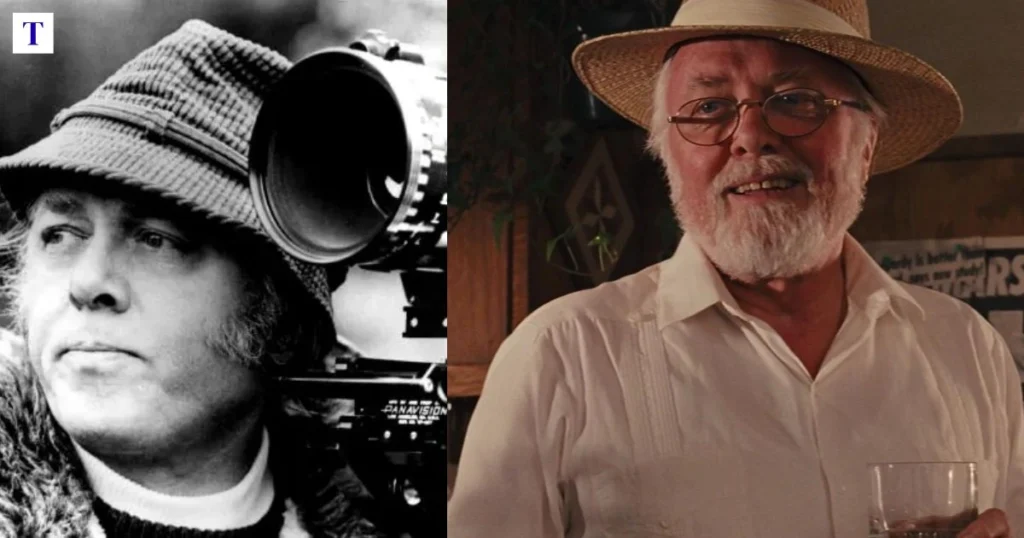

Richard Attenborough was one of Britain’s most accomplished film figures, building a career that lasted more than seven decades. He became famous as an actor through films such as Brighton Rock, The Great Escape and 10 Rillington Place, before reaching a new generation of viewers as John Hammond in Jurassic Park. He was also an important producer and director, with Gandhi becoming the defining achievement of his filmmaking career. The British Film Institute describes his career as spanning seven decades, with more than 70 acting credits and around a dozen directing credits.
For anyone searching for Richard Attenborough movies, his career is worth exploring in more than one way. His early films show a young actor taking on challenging characters, while his later work demonstrates his international appeal. His directing career adds another dimension, covering historical dramas, war films and biographical stories. This guide brings those different parts of his career together, including his movies in order, best films, early roles, directing work, most famous movie and final film.
Richard Attenborough Movies
Richard Attenborough’s screen career began with In Which We Serve in 1942, where he played a young sailor. His early years were followed by the breakthrough performance of Pinkie Brown in Brighton Rock. T 2he role was particularly important because it established him as a serious young actor rather than simply a supporting performer. During the 1950s, he showed a lighter side in British comedies such as Private’s Progress, Brothers in Law and I’m All Right Jack.
During the 1960s and 1970s, Attenborough’s film work became increasingly varied. He appeared in The Great Escape, Guns at Batasi, Séance on a Wet Afternoon, The Flight of the Phoenix, The Sand Pebbles, Doctor Dolittle, The Chess Players and 10 Rillington Place. He later returned to acting after a long period concentrating on directing, with Jurassic Park becoming one of the most recognisable films of his career.
Richard Attenborough Movies in Order
Looking at his movies chronologically shows how dramatically his career developed. His earliest work came during the 1940s, when he was establishing himself as a young British actor. The 1950s brought successful comedies and dramas, while the 1960s expanded his reputation internationally. By the 1970s, he was dividing his attention between acting, producing and directing, eventually spending much of his time behind the camera.
Here are some of the most important acting films in chronological order:
| Year | Film | Richard Attenborough’s role |
|---|---|---|
| 1942 | In Which We Serve | Young Deserting Sailor |
| 1947 | Brighton Rock | Pinkie Brown |
| 1948 | The Guinea Pig | Jack Hardacre |
| 1951 | The Magic Box | Jack Cardiff |
| 1956 | Private’s Progress | Stanley Windrush |
| 1957 | Brothers in Law | Henry Marshall |
| 1959 | I’m All Right Jack | Sidney De Vere Cox |
| 1963 | The Great Escape | Roger Bartlett |
| 1964 | Guns at Batasi | Regimental Sergeant Major Lauderdale |
| 1964 | Séance on a Wet Afternoon | Bill Savage |
| 1965 | The Flight of the Phoenix | Lew Moran |
| 1966 | The Sand Pebbles | Frenchy Burgoyne |
| 1967 | Doctor Dolittle | Albert Blossom |
| 1971 | 10 Rillington Place | John Christie |
| 1977 | The Chess Players | General Outram |
| 1993 | Jurassic Park | John Hammond |
| 1994 | Miracle on 34th Street | Kris Kringle |
| 1997 | The Lost World: Jurassic Park | John Hammond |
| 1998 | Elizabeth | Sir William Cecil |
| 2000 | The Railway Children | The Old Gentleman |
This is a selection of major and useful titles rather than every acting credit in his extensive career. It also demonstrates an important point: Attenborough’s filmography cannot be understood simply as a list of films. His career moved from young British actor to international performer and eventually to an award-winning filmmaker, with long periods when directing became his main professional focus.
Richard Attenborough Best Movies
The best Richard Attenborough movies depend on whether you are interested in his acting or his directing. For acting, Brighton Rock is essential because it established his reputation, while The Great Escape introduced him to a major international audience. Séance on a Wet Afternoon allowed him to give a more restrained dramatic performance, and 10 Rillington Place showed his ability to portray a deeply disturbing real-life criminal. Jurassic Park is the most accessible choice for viewers who know him mainly from modern cinema.
His directing achievements should also be included in any serious list of his best work. Gandhi stands above the rest because of its scale, historical importance and awards success. Other significant directing projects include A Bridge Too Far, Cry Freedom, Chaplin and Shadowlands. The BFI particularly notes Shadowlands as one of the most accomplished films of his later directing career, while Gandhi remains the project most closely associated with his ambitions as a filmmaker.
Richard Attenborough Movies Directed
Attenborough’s career behind the camera began with Oh! What a Lovely War in 1969. He followed it with Young Winston in 1972 and A Bridge Too Far in 1977, demonstrating an early interest in historical subjects and large-scale productions. His directing style often involved ambitious stories, substantial casts and carefully researched historical settings, making his films quite different from the smaller British productions that had established him as an actor.
His major directing credits include Oh! What a Lovely War, Young Winston, A Bridge Too Far, Magic, Gandhi, A Chorus Line, Cry Freedom, Chaplin, Shadowlands, In Love and War, Grey Owl and Closing the Ring. Gandhi was the standout achievement. Attenborough directed and produced the 1982 film, which won nine Academy Awards, including Best Picture, Best Director and Best Actor for Ben Kingsley.
Richard Attenborough Movies List
A useful Richard Attenborough movies list should show the different stages of his career rather than simply provide a long collection of titles. His early filmography contains British dramas and comedies, while his middle period includes war films, international productions and serious character studies. Later, his acting became less frequent as he concentrated on directing, before Jurassic Park brought him back to the screen in one of his most recognisable roles.
Some of the most important films to explore are In Which We Serve, Brighton Rock, Private’s Progress, I’m All Right Jack, The Great Escape, Guns at Batasi, Séance on a Wet Afternoon, The Flight of the Phoenix, The Sand Pebbles, 10 Rillington Place, The Chess Players, Jurassic Park, Miracle on 34th Street, The Lost World: Jurassic Park, Elizabeth and The Railway Children. Alongside these acting films, his directing list adds another essential group, led by Gandhi, A Bridge Too Far, Cry Freedom, Chaplin and Shadowlands.
Richard Attenborough Movies Young
Richard Attenborough’s early screen roles are particularly interesting because they are very different from the kindly, grandfatherly image many viewers associate with him. In Brighton Rock, he played Pinkie Brown, a young criminal whose cold and calculating personality made the performance one of the defining roles of his early career. He had already played Pinkie on stage, giving him a detailed understanding of the character before the film adaptation.
The 1950s then revealed his comic and dramatic range. He appeared in Private’s Progress as Stanley Windrush, in Brothers in Law as a barrister and in I’m All Right Jack as a businessman. The following decade brought more demanding and internationally visible roles, including Roger Bartlett in The Great Escape and characters in Guns at Batasi, Séance on a Wet Afternoon and The Sand Pebbles. These films are valuable for anyone wanting to see what Attenborough was like as a young and middle-aged actor rather than starting with Jurassic Park.
Richard Attenborough First Movie
Richard Attenborough’s first film appearance was in In Which We Serve, released in 1942. He played a young deserting sailor in the wartime film, beginning a screen career that would eventually span more than seven decades. Although the part was small, it was an important first step for an actor who was still at the beginning of his professional life.
His real early breakthrough came with Brighton Rock in 1947. Playing Pinkie Brown gave Attenborough the opportunity to demonstrate much greater dramatic range and helped establish his reputation in British cinema. The contrast between his first screen appearance and the complexity of Pinkie shows how quickly his career developed. Within a few years, he had moved from a small wartime role to becoming one of Britain’s most recognisable young actors.
Richard Attenborough Last Movie
Closing the Ring was Richard Attenborough’s final film as a director and his last feature film project. Released in 2007, it was a wartime romantic drama starring Shirley MacLaine and Christopher Plummer. The film came after an eight-year break from directing and marked the end of a filmmaking career that had begun with Oh! What a Lovely War in 1969.
His final period as an actor had already included several recognisable performances. After returning to acting in Jurassic Park following a long absence, he reprised John Hammond in The Lost World: Jurassic Park. He also played Kris Kringle in Miracle on 34th Street and appeared in Elizabeth and The Railway Children. This makes his final years especially interesting: even while his directing career was approaching its conclusion, his earlier acting work continued to connect him with new audiences.
Richard Attenborough Most Famous Movie
For today’s general audience, Jurassic Park is probably Richard Attenborough’s most famous acting film. Steven Spielberg’s 1993 blockbuster brought him back to the screen after a 14-year absence from acting. He played John Hammond, the enthusiastic creator of Jurassic Park, whose ambition and optimism help drive the story while his mistakes contribute to the danger facing the visitors.
However, “most famous” and “most important” are not necessarily the same thing. The Great Escape was a major international success and remains one of his defining performances, while Brighton Rock is central to his early reputation. If his directing career is included, Gandhi is arguably his most important film because it became an enormous critical and awards success. The film won nine Oscars, including Best Picture and Best Director, making it the clearest example of Attenborough’s impact behind the camera.
Richard Attenborough Cause of Death
Richard Attenborough died on 24 August 2014 at the age of 90. His death marked the end of a career that had included acting, producing, directing and extensive work supporting British film institutions. He had also served as chairman of the British Film Institute from 1981 to 1992, making his contribution to cinema much broader than his own film credits.
His death also marked the end of an unusually long creative journey. He had started as a young wartime-era actor, become an internationally recognised performer, and then spent decades developing major films as a director. His legacy therefore rests on several different achievements: memorable acting performances, ambitious historical films, support for the British film industry and the remarkable success of Gandhi.
(FAQ’s)
What is Richard Attenborough’s best movie?
There is no single answer because Richard Attenborough had a long career as both an actor and director. Brighton Rock, The Great Escape, 10 Rillington Place and Jurassic Park are among his most notable acting films, while Gandhi is widely regarded as his greatest achievement as a director.
What was Richard Attenborough’s first movie?
Richard Attenborough’s first film appearance was In Which We Serve in 1942. His major breakthrough came with Brighton Rock in 1947, in which he played the memorable role of Pinkie Brown.
What is Richard Attenborough’s most famous movie?
Jurassic Park is probably Richard Attenborough’s most recognisable film to modern audiences because of his role as John Hammond. However, The Great Escape and Brighton Rock remain two of the most important films of his acting career.
Did Richard Attenborough direct Gandhi?
Yes. Richard Attenborough directed and produced Gandhi, released in 1982. The film became his most celebrated directing achievement and won nine Academy Awards, including Best Picture, Best Director and Best Actor.
What was Richard Attenborough’s last movie?
Closing the Ring, released in 2007, was Richard Attenborough’s final feature film as a director and his last major film project. It marked the end of a directing career that began with Oh! What a Lovely War in 1969.
Conclusion
Richard Attenborough’s filmography is remarkable because it covers far more than one famous Hollywood role. He began with In Which We Serve and established himself through the demanding performance of Pinkie Brown in Brighton Rock. He then became an international star through films such as The Great Escape, explored darker material in 10 Rillington Place, and returned to worldwide popularity as John Hammond in Jurassic Park.
His work as a director is equally important. A Bridge Too Far, Cry Freedom, Chaplin and Shadowlands demonstrate his ambition, while Gandhi stands as his greatest filmmaking achievement, winning nine Academy Awards. For a first introduction to his career, Brighton Rock, The Great Escape, Jurassic Park and Gandhi provide four very different examples of what made him special. Together, they show why Richard Attenborough remains an important figure in British cinema rather than simply the actor who played John Hammond.